KENJI HASEGAWA
Providing wild game for the BBQ
Kenji Hasegawa
Director of Japan Multi Hunters Inc. /
Owner of Hasegawa Gibier Butcher
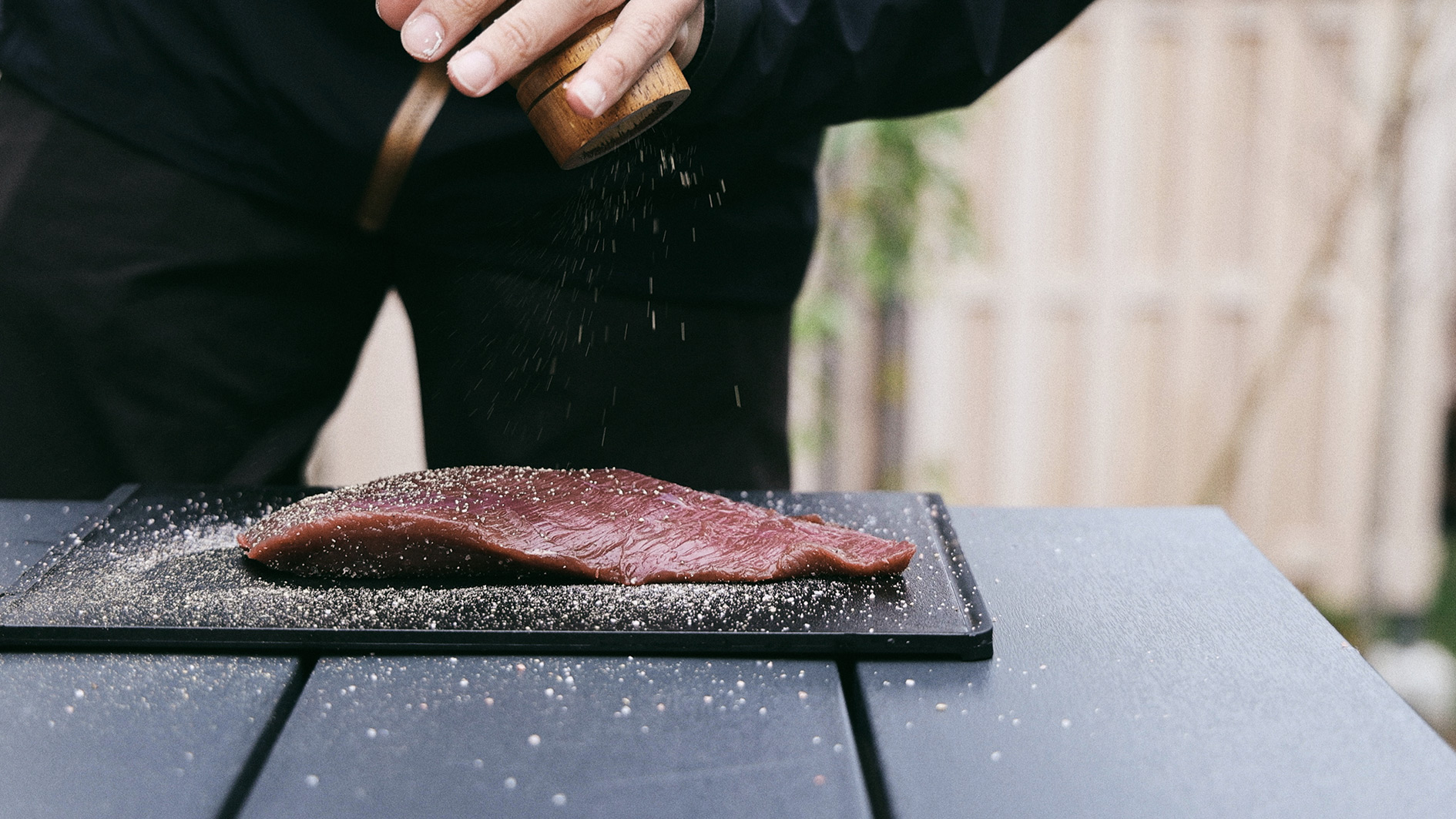
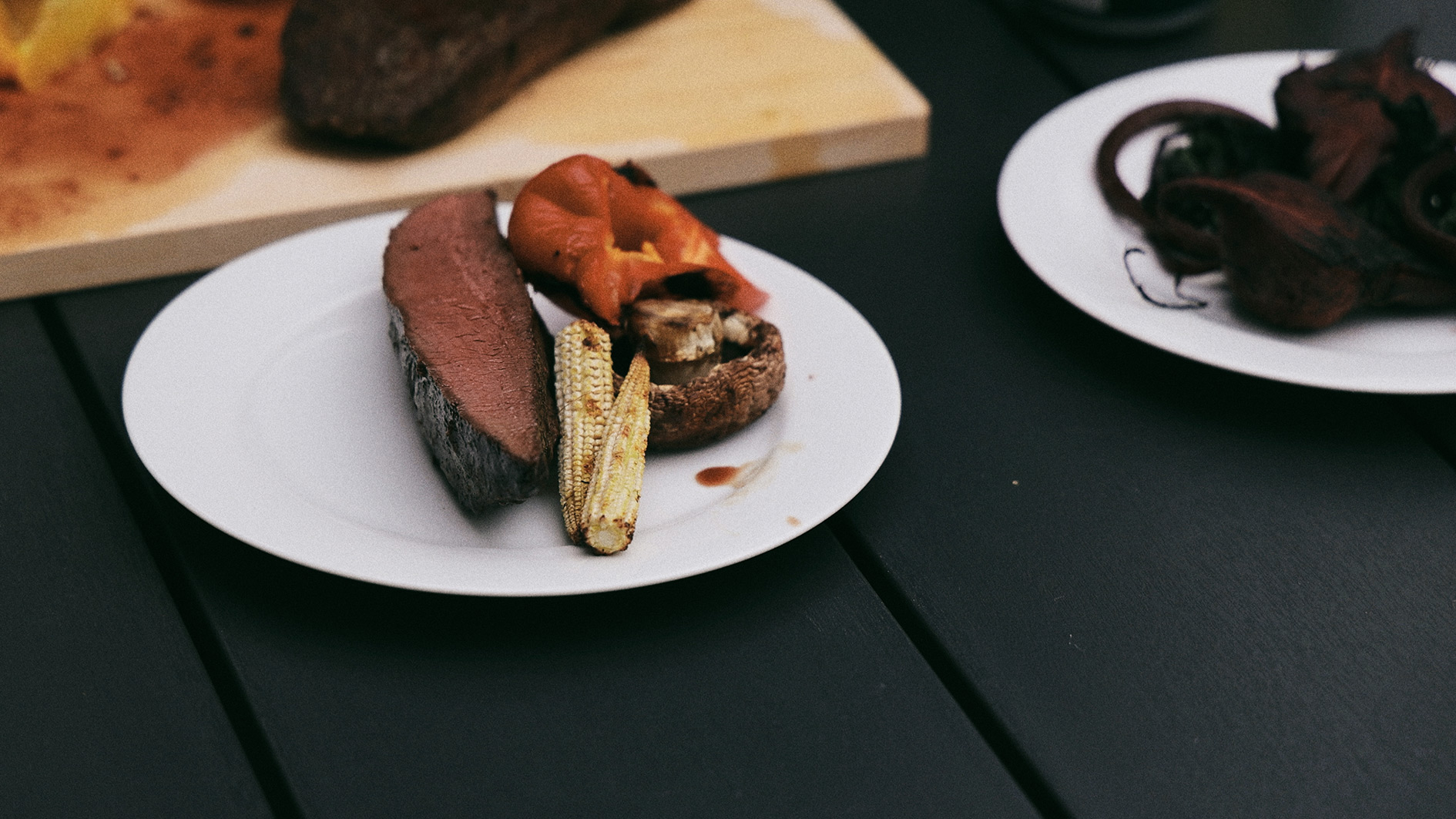
One of the highlights of a stay at GEOSPOT is the wild game BBQ set. Venison is sourced from Hasegawa Gibier Butcher, a processing facility based in Odawara, where locally hunted deer are carefully handled and prepared.
Behind this food experience—enjoying nature’s bounty—lies a growing issue in recent years: the impact of wildlife in the Odawara and Hakone areas. Damage caused by deer and other animals affects not only agricultural crops, but also vegetation and forest ecosystems.
By sharing the seasonal appeal of wild game and transforming it into a valuable culinary experience, the aim is to address these social challenges in a positive way. We spoke with Mr. Hasegawa about the significance and potential of gibier—something only possible in a place where mountains and human life exist in close proximity.
*Please note that offerings may vary depending on the season.
—Could you tell us about your business?
We run a specialty gibier butcher in Odawara, handling everything from processing and butchering to preparing the meat for consumption. In simple terms, we operate a “sixth-sector” business, managing the entire process from production to the dining table.
At the same time, we also host workshops such as hunting experiences and butchering sessions, creating opportunities for people to learn about and engage with gibier.
—What led you to start working with gibier?
I began this work in November 2021. Originally, I was a chef, and I first encountered gibier about 15 years ago.
When I visited actual hunting sites, I felt that the social issues caused by wildlife couldn’t be solved by governments alone. That made me want to approach it in a more positive way.
I had previously run a restaurant in Tokyo that focused on gibier and seasonal ingredients from producers, but due to the pandemic, I decided to close both the restaurant and the company.
—And that led to founding Japan Multi Hunters Inc. and Hasegawa Gibier Butcher.
At the restaurant, we were able to create delicious dishes using game meat within our own reach. But from a broader perspective, I felt there were still challenges in how wild game is processed and distributed as food.
To address this, I concluded that it was necessary to operate processing and butchering facilities. By doing so, we can provide a more stable supply and make it easier for restaurants and hotels to incorporate gibier into their menus.
—Where is your game sourced from?
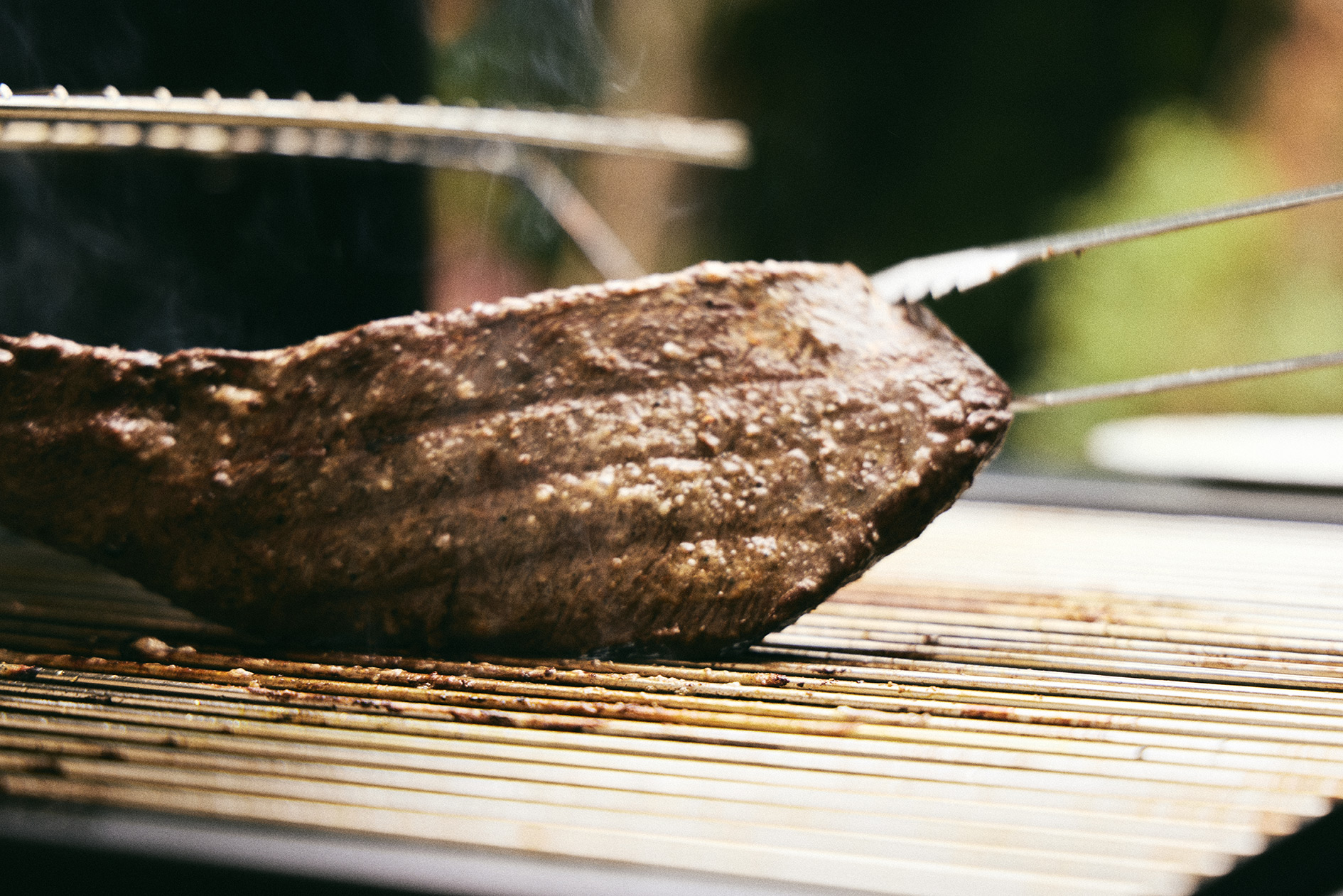
We work across the Seisho area, including Odawara, Hakone, Oiso, and Ninomiya, in collaboration with local hunting groups.
In many cases, animals can be delivered to our facility within as little as 20 minutes. According to national guidelines, wild game must be brought into a processing facility within two hours, so Odawara’s proximity between mountains and urban areas is a significant advantage.
The faster the process, the better the freshness. From evisceration to initial butchering, speed and precision directly affect the quality of the meat. It’s similar to techniques used in fish processing—careful handling at each step determines how well quality is preserved.
To minimize odors caused by organs or blood degradation, it’s essential to separate them from the meat as quickly as possible, then cool it down immediately.
—Does this affect texture as well?
Yes. We don’t rely heavily on aging to create tenderness. Instead, we want people to enjoy the natural freshness of venison.
We aim for a flavor profile that’s approachable and widely appealing. The idea is to create gibier that allows chefs to simplify their cooking and highlight the ingredient itself—meat that suits the Japanese palate.
Even those trying gibier for the first time, or those unfamiliar with venison, can enjoy it. It’s a quality that even children can appreciate.
—Beyond flavor, wildlife issues like bears have also been in the news. What are your thoughts?
Bears are particularly dangerous, so only a limited number of hunters can deal with them. Another issue is the lack of facilities and expertise to process them as food after capture.
At our company, we handle over 700 animals annually, including deer, wild boar, bears, and small game. However, about 90% of hunted animals are still either discarded or consumed privately—they rarely enter distribution.
This is largely because only meat processed at certified facilities can be sold. While hunters receive compensation for culling, the effort required to process animals into food often outweighs the benefits, leading to burial or incineration instead.
—In many cases, culling does not extend to full utilization as food. What challenges exist in the handling and processing that follows?
Sometimes, hunters partially butcher animals in the mountains and leave behind remains. The smell attracts bears.
Bears that once fed primarily on plants may begin to eat meat if food becomes scarce. Likewise, when human food waste is left in mountainous areas, bears learn that food is available near people, expanding their range.
Since bears have no natural predators, their numbers will continue to grow unless controlled.
—In Odawara and Hakone, deer overpopulation is one of the most pressing environmental challenges.
Exactly. With growing populations and increasing capture numbers, the issue is no longer limited to agriculture. It’s affecting forestry and, more broadly, the ecological balance of the region.
In Hakone, even along hiking trails, vegetation is disappearing. Newly planted trees are eaten before they can grow, preventing forests from regenerating.
This impacts not just the mountains, but also the ocean. Reduced nutrients flowing from forests into rivers eventually affect fish populations. The entire ecological cycle is disrupted.
—So gibier plays a role in solving these issues.
Yes. When we founded this company, we established two core principles:
“Respect every life, bring it closer, and enrich it”
“Delicious, enjoyable, and socially meaningful”
By working with restaurants and hotels, we can bring gibier to a wider audience. As more people discover its flavor and want to eat it again, opportunities to enjoy gibier increase.
Through this, we hope to create a positive cycle between nature’s bounty and human activity.
Properly processed gibier is truly delicious. And what makes it unique is that, unlike most meats, it has a season.
As a chef, I’ve always followed seasonal ingredients, and for me, gibier is one of the most fascinating.
—At GEOSPOT, you mainly provide venison cuts like thigh and loin. How do flavors vary by season?
One clear difference is in males: from spring to around October, when fresh grass is abundant, they grow by feeding on it, resulting in richer, more robust flavors with higher fat content. Larger animals tend to have even deeper flavor.
On the other hand, just before spring, females—especially before giving birth—develop a milky, almost dairy-like flavor, similar to that of female Wagyu.
Even within deer alone, flavor varies depending on season, gender, and size.
We hope guests will return to GEOSPOT throughout the year to experience these seasonal differences.