SHIRO YAGO
Providing orange juice for breakfast
Shiro Yago
Representative, Yago Farm / Chairman, Seisho Umikaze Farm
“Seisho Umikaze Farm” provides the fresh vegetables and mandarin orange juice included in GEOSPOT’s BBQ set. By bringing together carefully grown produce from its member farmers, the collective delivers the richness of Odawara as a unified offering.
The group also works to support farmers’ income and encourage new entrants into agriculture. As the number of abandoned farmlands continues to increase due to an aging population, they collaborate closely to support one another and sustain agriculture for the future.
We spoke with Mr. Yago, chairman of Seisho Umikaze Farm and representative of Yago Farm, as well as Ms. Omura, the official ambassador of the group.
— We understand the mandarin juice you provide to GEOSPOT is made with great care.
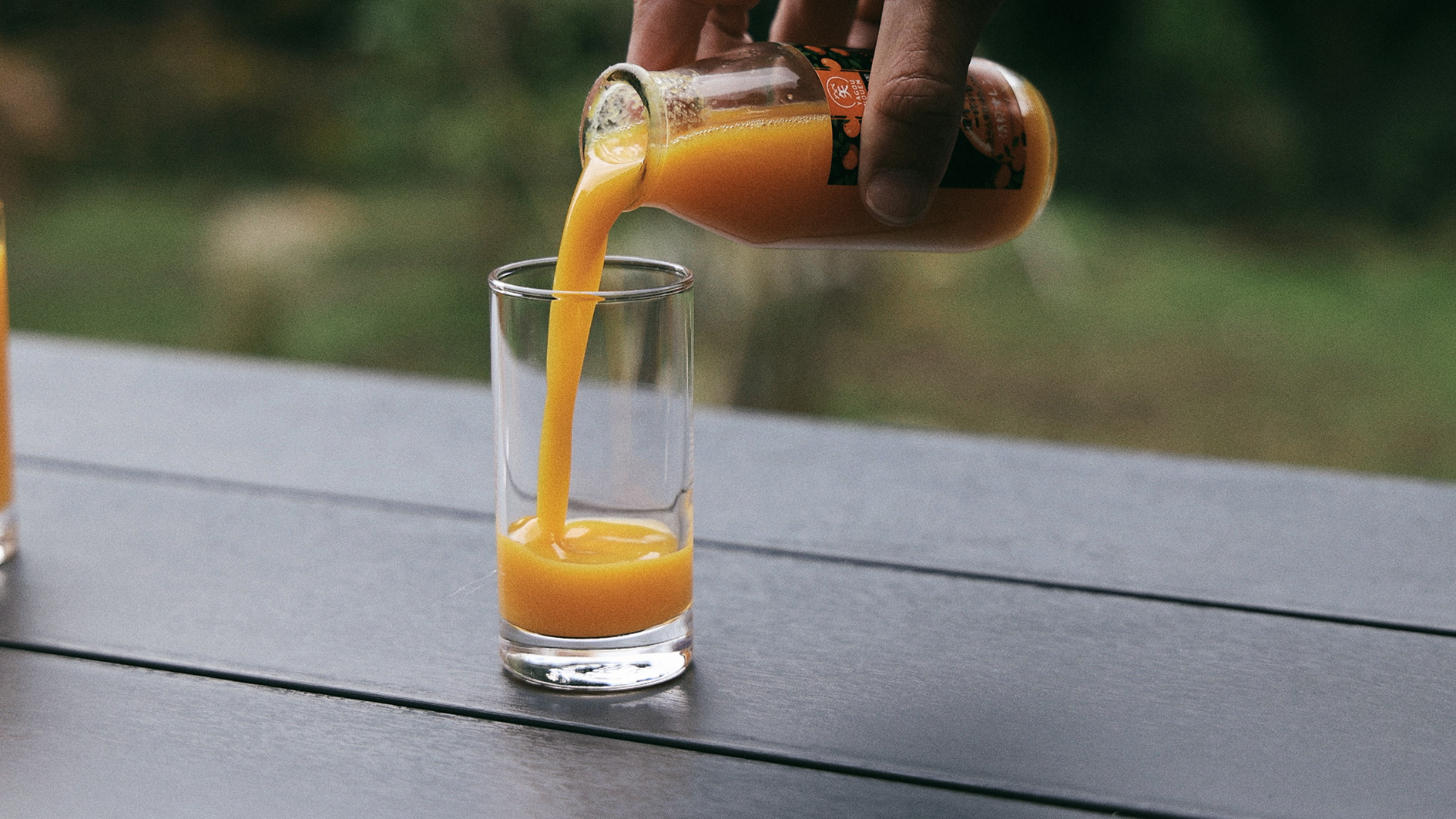
The juice is produced at a processing facility run by members of Seisho Umikaze Farm. Because we make it ourselves, we can remove anything of poor quality and extract only what’s truly good.
If you outsource, even slightly inferior fruit can end up being used. But since we handle everything ourselves, we carefully eliminate anything that doesn’t meet our standards.
What’s interesting is that even within a single tree, the quality of fruit varies depending on where it grows. We do use what’s classified as “B-grade,” but even within that, we can identify fruit that may look imperfect but tastes excellent. So even for juice, we select only the best-tasting fruit.
When peeling, we also remove anything damaged, insect-bitten, or likely to spoil. That’s how we achieve a clean, pure flavor without any off-notes.Currently, we are using Kiyomi oranges.
Moving forward, we plan to press and serve whatever citrus is in season at the time. From November through January, we start with early-season Satsuma mandarins, followed by Aoshima mandarins. From late January to February, Dekopon appears, then Shonan Gold in February, followed by Kiyomi, Kara mandarin, and finally Valencia oranges. This is the general cycle of our main products.
— You mainly cultivate citrus. Are there particular characteristics of your farming methods or this land?
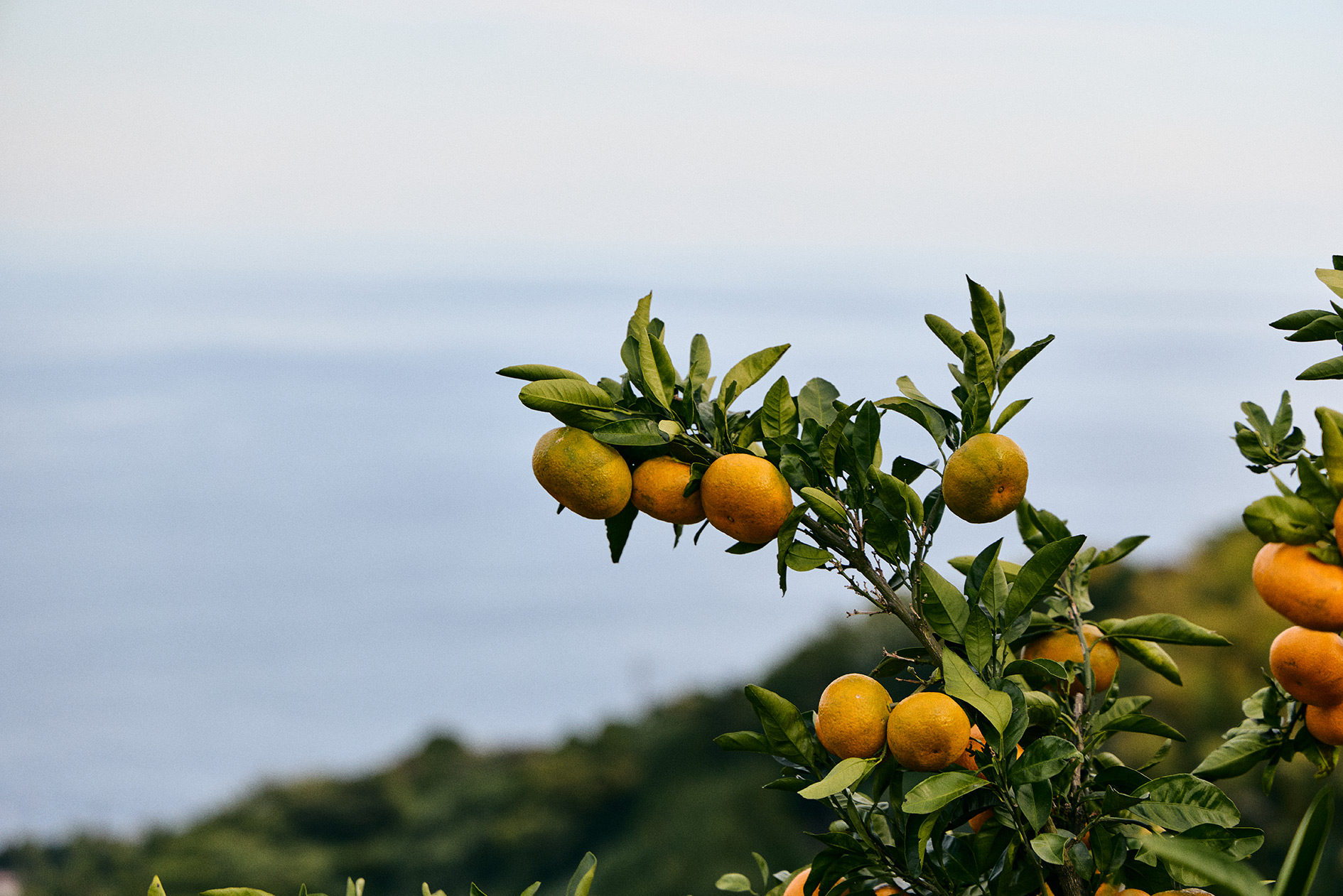
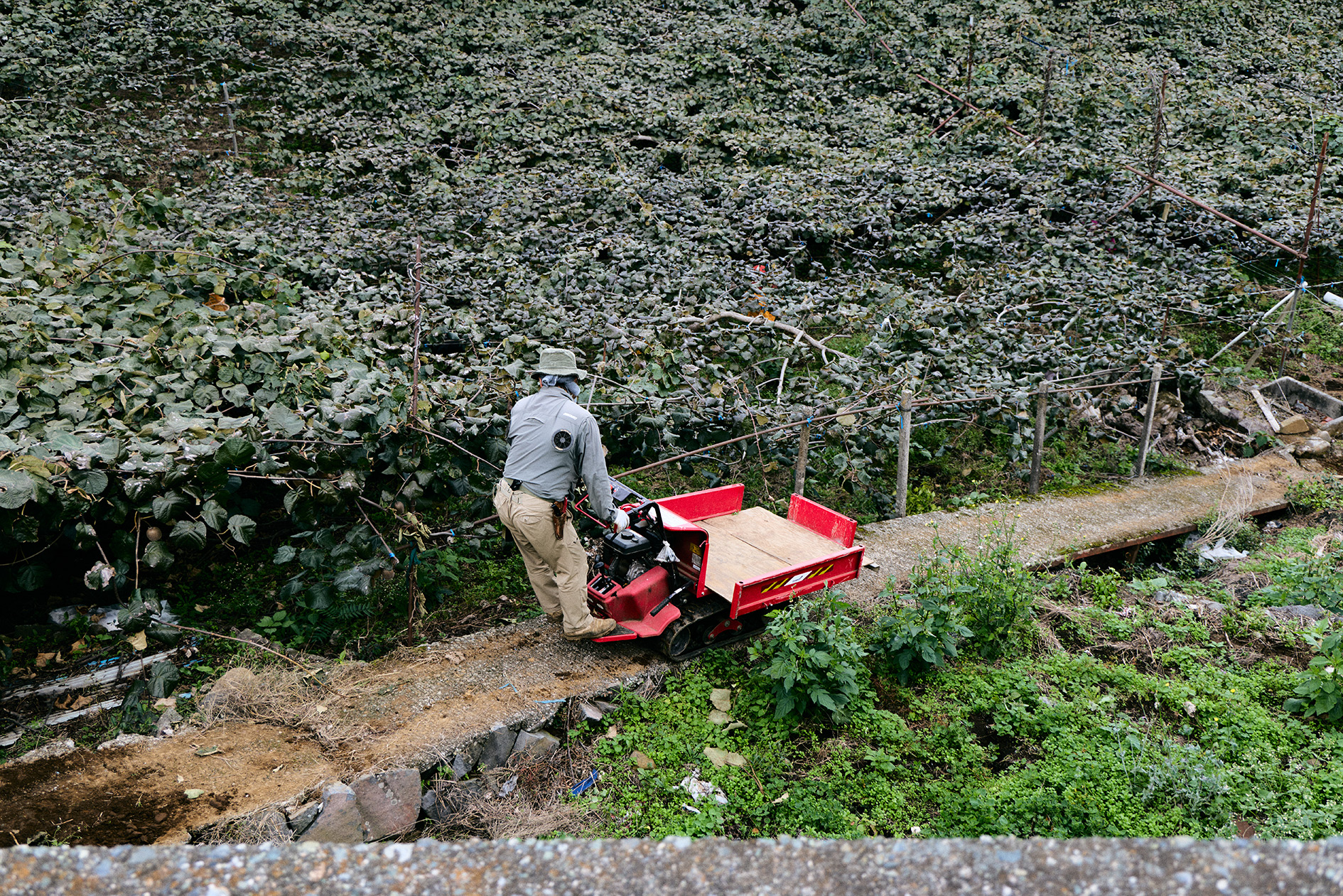
It’s all about the terrain. The land is steep, with stone walls, and almost everything has to be done by hand. Tractors can’t enter, so we work by climbing these slopes. It’s a harsh environment, but the good drainage created by the slope benefits the fruit. Stressing the trees in this way is said to produce better flavor—less water content, more concentration.
We’re also right by the sea, so there’s salt exposure. But in trying to protect themselves, the trees actually produce better fruit. Citrus grown near the sea is known to taste better—regions like Kumamoto, Wakayama, Ehime, Aichi, and Shizuoka are all coastal. Terrain plays a huge role in citrus quality.
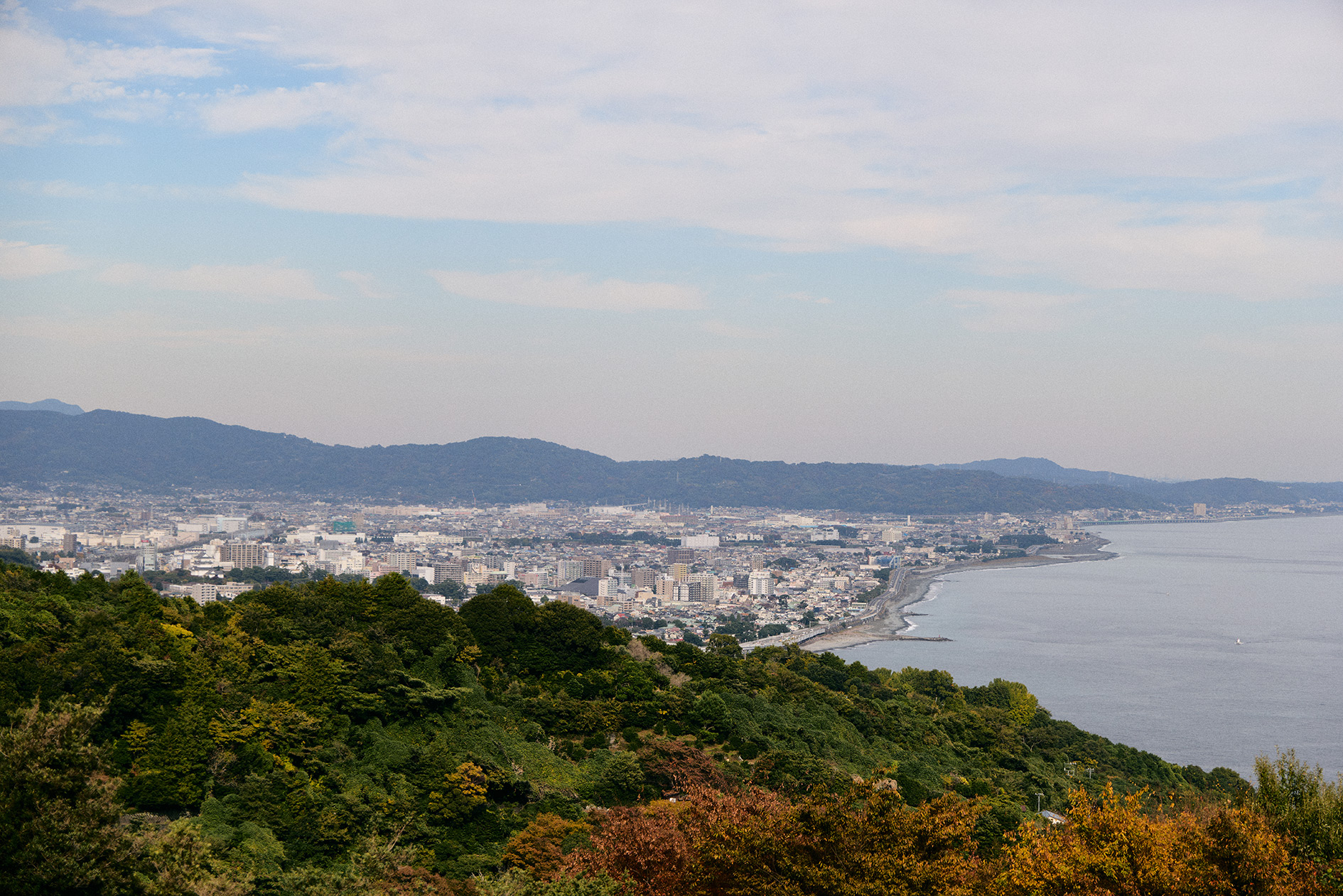
Recently, however, rising temperatures have become a challenge. Trees are suddenly dying in various regions, and the fruit itself is becoming more watery. In the past, citrus from Kumamoto was considered the best, while areas like Mikkabi were more acidic, and Odawara was extremely sour. Odawara’s reputation came more from being the northern limit for citrus cultivation than from taste.
But with global warming, cultivation zones are shifting north—people even say citrus can now be grown in Yamagata. Personally, I think Mikkabi and Odawara now produce some of the best citrus.
— We also noticed a large number of kiwi fruits being cultivated. They were incredibly juicy.
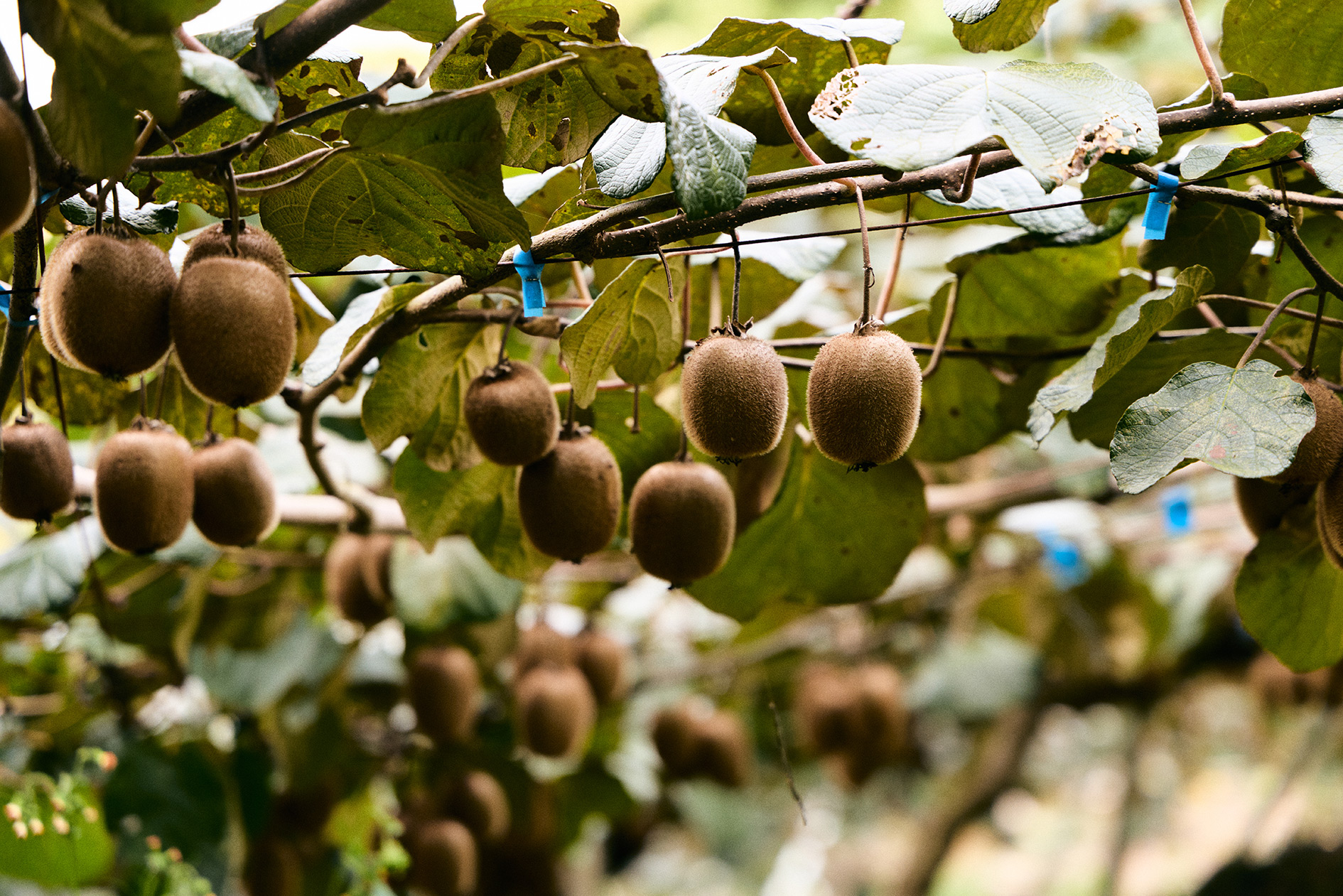
For kiwi, we focus heavily on fertilizer. By using 100% organic fertilizer, we improve the fruit’s flavor. We prefer not to use pesticides, but using none at all isn’t ideal either, so we apply them only once or twice a year when necessary. This is a form of special cultivation: reduced pesticides combined with abundant organic fertilizer.
Another key factor is ripening. Freshly harvested kiwis are rock-hard and inedible. We place them in a warm environment and expose them to ethylene gas for about a week. They soften slightly, and after about two weeks, they reach their ideal eating condition. If you leave fruit out at home, it may soften, but it often just dries out and becomes sour. That’s why we handle the ripening process ourselves and provide the fruit at its best.
We are currently developing fruit sauces using kiwi as well. It would be interesting to incorporate these into GEOSPOT’s offerings.
— What led you to start farming?
I used to run a ramen shop with my brother. After the earthquake and planned blackouts, the business declined, and I left the shop on March 31, 2011. I became a farmer the next day.
My wife’s family grew mandarins, and as her parents were getting older and planning to step away from farming, I asked if I could take over.
— How large was the operation when you started?
We began with about 8,300 square meters of land inherited from my in-laws. As neighboring farmers retired, we took over their land as well. Now we manage around 79,000 square meters across 40 locations—about 1.7 times the size of Tokyo Dome.
Starting citrus farming from scratch takes more than five years before any income is generated. Even then, yields are minimal. It takes about ten years before trees mature enough to produce stable income. Because of this, starting from abandoned farmland is not realistic for new farmers. So whenever someone retires, we continue restoring about 10,000 square meters each year.
— Could you tell us more about Seisho Umikaze Farm as a collective?
We’re not a produce distributor—we’re a group of farmers. We take full responsibility for what we grow, and we choose to work with partners who share that mindset. One of our main goals is to improve farmers’ income. With the average farmer now around 80 years old, more and more fields are being abandoned. But if income improves, abandoned land will decrease.
Today, farmers are expected to handle everything themselves—production, sales, marketing, and distribution. It’s a heavy burden, especially since many farmers are not used to sales or communication. So within Umikaze Farm, those who are good at sales take the lead and bring opportunities to others. Through this collaboration, we aim to improve everyone’s income.
— You also support new farmers. Are there many younger members?
There are about four experienced farmers, including myself, and four to five newer farmers. Agriculture today is extremely challenging, and many people give up—especially new entrants. They lack equipment, storage, and infrastructure. They start with passion, but low income gradually wears them down.
Umikaze Farm exists to support these people—those who genuinely want to continue but struggle to do so. We share equipment, lend tools, and support one another horizontally.
We also work to increase interest in farming through school programs, lectures, and agricultural academies. When someone decides to pursue farming, we invite them to join us and grow together.
— What value do you see in providing your produce to a place like GEOSPOT?
We put a lot of care into growing our produce, but there aren’t many opportunities for people to try it. If it’s something you can eat on the spot, people might buy more if they like it. But if it’s something they cook at home, the experience often ends there.
At GEOSPOT, guests can experience the produce through a BBQ during their stay. If that leads them to want to buy it on their way home, that connection can support farmers’ income.
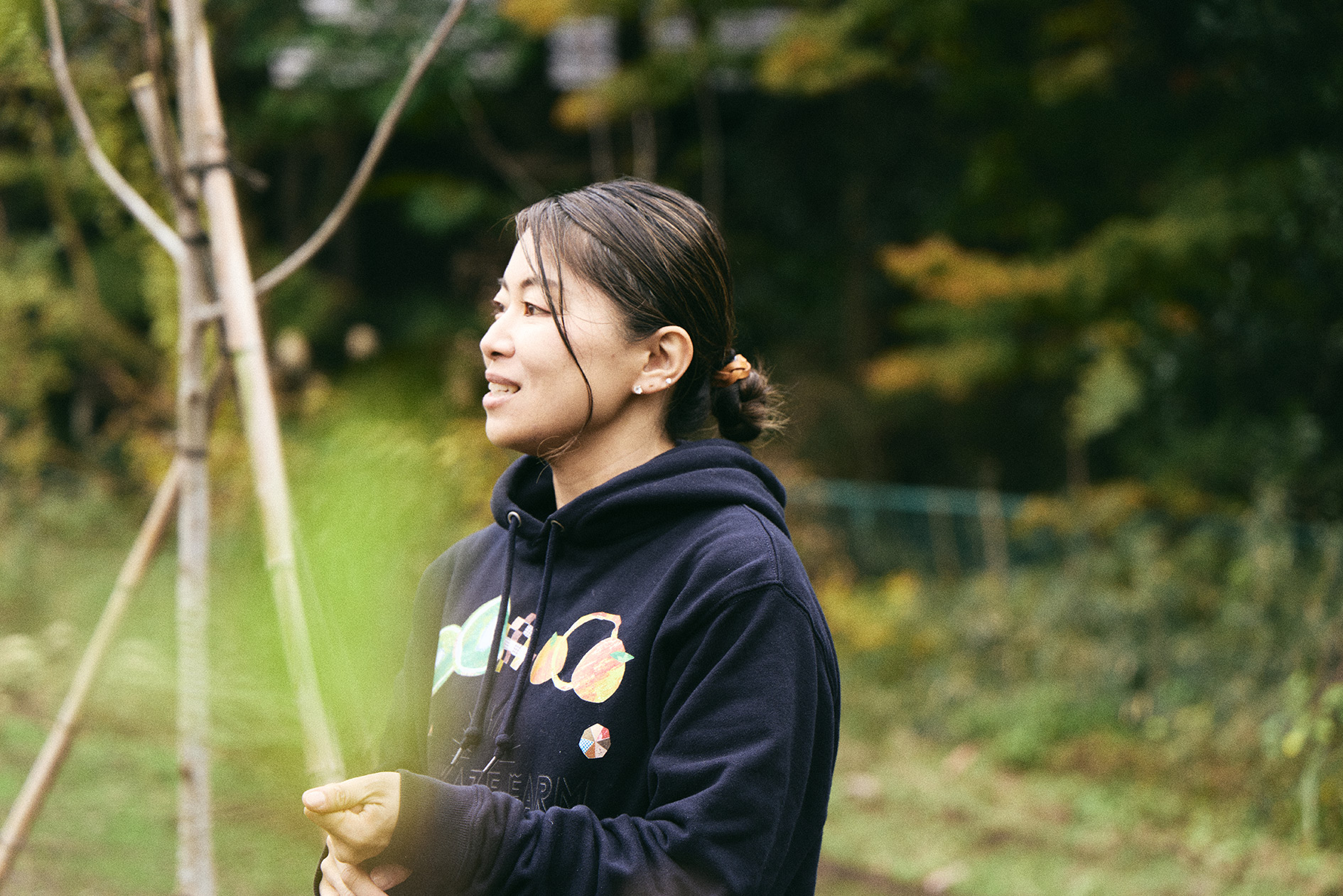
We also spoke with Natsumi Omura,
the official ambassador of Seisho Umikaze Farm.
— As an ambassador, you help promote the farmers’ produce, correct?
Yes. Odawara is a wonderful place, but many of its charms are still not widely known. We organize activities such as markets to help share its appeal.
— What kinds of farmers are part of the group?
Each farmer has different specialties—some grow fruit, others vegetables, even wood ear mushrooms.
By working together, we can offer a wider variety and create a stronger impression for customers. A single farm can only produce so much, but as a collective, we can introduce a broader range of produce. Unlike conventional distribution through agricultural cooperatives, our members deal directly with restaurants. Without intermediaries, pricing can be more balanced for both sides.
Farmers like Mr. Yago taste the fruit from each tree and harvest only the best ones. Even if there are variations, inferior ones are not included. That level of care builds trust with both restaurants and customers.
— How do you feel about supplying produce to GEOSPOT?
Hakone is close to Odawara, which allows us to deliver fresh produce quickly. We hope this becomes an opportunity for guests to discover the appeal of Odawara’s ingredients.